TrustedTech operates across licensing, cloud solutions, professional services, and security, helping organizations build a cohesive technology strategy that connects licensing decisions with cloud infrastructure, security posture, and AI readiness. Pulse 2.0 interviewed their VP of Technology, Andy Nolan, to learn more:
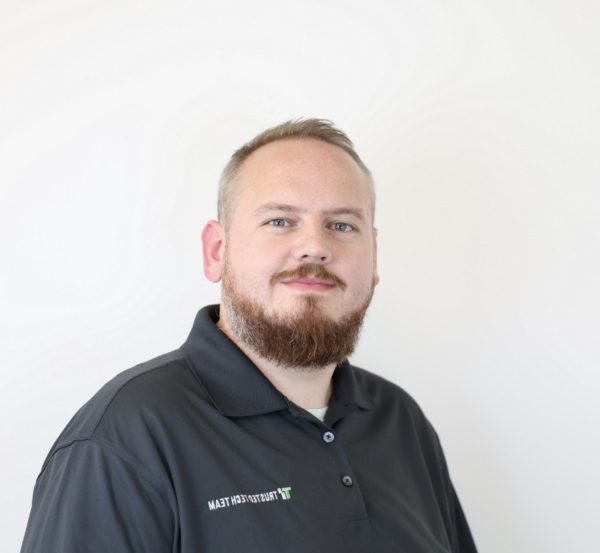

Background in IT
Asked about his background, Nolan said:
Now Vice President of Technology at TrustedTech, I’ve been in the IT field for about 10 years, working across environments of every shape and size, from small offices to Fortune 500 corporations with Active Directory forests containing more objects than some small nations. What’s stayed constant across all of it is my work ethic: show up, do a good job, and actually solve the problem in front of you. I’m enthusiastic about technology and learning, and I care a lot about community, sharing IT knowledge with anyone who’s interested, not just the people in the room. Most of all, I love working with people in the moments when technology isn’t working, which, in this industry, is where the real trust gets built.
Primary Responsibilities
Asked about his primary responsibilities, Nolan shared:
In my current role, I own the systems that run TrustedTech behind the scenes – the platforms our teams use every day to serve customers, from our CRM and billing infrastructure to our cloud environments and internal automation. My job sits in the middle of strategy and execution – evaluating vendors and tools we bet on, architecting how our systems talk to each other, and getting hands-on when something breaks in production, and we are all hands on deck.
Core Products and Features
Asked about the company’s core products and features, Nolan detailed:
TrustedTech operates across three primary pillars: The first is licensing, both on-premise Microsoft licensing (Windows Server, SQL Server, Microsoft Office, Exchange, SharePoint) and cloud licensing optimization for Microsoft 365 and Azure. The second is cloud services and professional support, which includes Microsoft Copilot implementation, Azure infrastructure and tenant migrations, environment optimizations, modern work implementations, seamless migrations, mobile device management, and our Intune Accelerator Program. The third is security, where we offer email security, endpoint protection, managed detection and response, security awareness training, and backup and retention solutions. What ties all of this together is our advisory model. We don’t just sell licenses or deploy tools; we help organizations build a coherent technology strategy that connects licensing decisions to cloud architecture to security posture to AI readiness.
Significant Milestones
Asked about the company’s most significant milestones, Nolan noted:
A few stand out. Achieving Microsoft Direct Cloud Solution Provider status was pivotal early on because it gave us a direct relationship with Microsoft and a much faster, more responsive ability to serve our customers. Earning all six Microsoft Solutions Partner designations across the Microsoft Cloud Partner Program validated the technical depth we’d invested in. But the milestone I’m most proud of is being named a Microsoft Managed Partner, a status reached by fewer than one percent of Microsoft’s global partner ecosystem of over 400,000 partners. That’s not a credential you buy; it reflects years of delivering real outcomes for customers at a very high level. More recently, our rebrand from Trusted Tech Team to TrustedTech in August 2025 marked a meaningful evolution — not just a cosmetic change, but a reflection of how much the company had grown from a licensing authority into a full-scale technology partner. And our AI research program, which has now produced two major data releases on Shadow AI and workforce readiness, has established us as a credible thought leader in the enterprise AI governance conversation.
Competitive Differentiation
Asked what differentiates the company from its competition, Nolan emphasized:
Most providers in our space make a choice: they’re either a licensing shop or a technical services firm. TrustedTech does both, and does them together as a unified model. That integration is genuinely rare. When an IT leader works with us, they’re getting licensing optimization, cloud architecture guidance, and operational support from a single partner who can see the full picture: cost, compliance, security, and long-term scalability, all at once. We’re also a Direct CSP and a Microsoft Managed Partner, which means our relationship with Microsoft gives our customers access to faster support, better visibility into the Microsoft roadmap, and a level of technical expertise that most partners simply can’t match. And increasingly, our original research on how organizations are actually adopting AI, not how they think they are gives us a data-driven perspective that competitors aren’t bringing to the table.
Future Goals
Asked about the company’s future goals, Nolan pointed out:
We’re accelerating in three directions. First, Microsoft Copilot enablement, which is helping organizations deploy AI responsibly within their Microsoft 365 environments, with the governance frameworks and user readiness programs to make it stick. Second, scaling our Azure infrastructure and modernization services, including tenant migrations, security hardening, and advanced cloud architecture. Third, broadening our security and business continuity portfolio. We’ve seen explosive growth in cybersecurity, backup, and disaster recovery, and we see those areas becoming even more central to what enterprise customers need as their AI and cloud footprints expand. The overarching goal is to be the partner that enterprises trust not just to solve today’s IT problems, but to help them navigate whatever comes next.
Why Executives Bypass AI Governance
Asked why executives seem to bypass governance policies around unapproved AI tools at higher rates than other employees, Nolan explained:
The honest answer is that executives are wired to move fast, and AI tools let them do that. When a senior leader discovers that a particular AI tool helps them draft a strategy memo, analyze a dataset, or prepare for a board conversation in a fraction of the time, they’re going to use it. There’s also a cultural dynamic at play. Executives often feel, consciously or not, that governance policies are designed to manage risk at the employee level, not at their level. They’re setting the vision, not following the playbook. What our data surfaces is a striking paradox: 65% of global decision-makers and 67% of U.S. decision-maker-level employees use unapproved AI tools, more than double those below decision-maker level, while at the same time 56% of global decision-makers are concerned about employees using Shadow AI, despite being the most active users themselves. That gap between what executives say and what they do is where organizations have the biggest unmanaged risk.
Rethinking AI Governance
Asked how companies should rethink AI governance now that Shadow AI is increasingly driven from the top down, Nolan described:
Governance frameworks have historically been designed to manage behavior from the bottom up, policies trickle down, compliance is monitored at the employee level, and exceptions are assumed to come from the ranks. That model is broken for AI. As organizations race to adopt AI technologies, TrustedTech’s data shows the real exposure is originating in the boardroom. So governance needs to be redesigned with leadership behavior explicitly in scope. That means AI usage policies that apply equally and visibly to the C-suite. It means building visibility tools that give IT and security teams a full picture of AI activity across every level of the organization, not just the workforce. And it means creating a culture where using approved AI tools is understood to be the faster, smarter choice not a constraint. The goal isn’t to slow down executives; it’s to give them equally powerful, sanctioned tools so there’s no productivity tradeoff for doing things the right way.
Security and Compliance Risks
Asked about the biggest security or compliance risks when employees, especially executives, use unauthorized AI tools, Nolan outlined:
The risks are significant and layered. When an executive pastes a sensitive document, a financial model, a customer record, or a strategic plan into an unapproved AI tool, that data potentially leaves the organization’s control entirely. Depending on the tool’s terms of service, that information could be used to train models, stored on third-party servers, or accessible to the tool’s provider in ways that violate data residency requirements, industry regulations, or contractual obligations with customers. 77% of employees acknowledge there are security or data privacy risks associated with unapproved AI usage, yet behavior remains unchanged. More troubling still, 21% of global Shadow AI users do so because they don’t want their organizations to see or access their data, which raises serious governance red flags around insider risk. At the executive level, the stakes are higher because the data being handled is typically more sensitive. A data breach that traces back to executive Shadow AI use would be extraordinarily difficult to explain to a board, a regulator, or a customer.
Balancing Innovation and Security
Asked how organizations can encourage AI innovation and productivity without creating unnecessary security exposure, Nolan noted:
The framing of “innovation versus security” is actually the wrong frame, and that’s part of what’s driving the problem. When organizations communicate AI governance primarily as a restriction, employees, including executives, will find workarounds.
The better approach is to build a sanctioned AI environment that’s genuinely competitive with the unapproved tools people are already gravitating toward. Microsoft Copilot, deployed properly within Microsoft 365, is a good example: it gives users powerful AI capabilities within an environment that maintains the organization’s data boundaries, compliance posture, and security controls. When people have access to approved tools that actually meet their productivity needs, the incentive to go outside those boundaries drops significantly.
The other critical piece is AI readiness training. Our wave two research found that 46% of U.S. respondents say their organization lacks adequate training on safe and secure AI use and 41% of workers say they lack clear guidance on how AI should be used at work, creating the exact conditions that drive ungoverned AI use. Clarity and confidence are as important as the tools themselves.
First Steps for Companies Facing Shadow AI
Asked what practical first steps companies should take if they discover widespread Shadow AI usage, Nolan concluded:
The first instinct many IT leaders have is to block or restrict. That’s usually the wrong move, because it doesn’t address the underlying need that drove people to those tools in the first place, and it risks driving the behavior further underground.
The first step should be understanding the scope: what tools are being used, by whom, and for what purposes. That requires visibility infrastructure that most organizations don’t currently have.
From there, the priority is closing the governance gap by quickly establishing clear, role-appropriate policies that explicitly address AI tool usage, and communicating them in a way that makes the “why” obvious to everyone, including the leadership team.
The third step is providing sanctioned alternatives that are genuinely capable. If you’re asking people to give up a tool they find valuable, you need to replace it with something at least as useful. And finally, invest in structured readiness. Our research shows that 36% of employees report self-teaching as their primary route to AI skills, compared to just 23% who received any formal employer training. That gap is where risk accumulates. Organizations that close it through formal, role-specific AI training and readiness programs are the ones that will be able to move fast on AI adoption without sacrificing the controls that protect them. TrustedTech’s Microsoft Readiness Assessments are designed specifically to help companies build that structured path from ad hoc usage to secure, scalable AI deployment.

