

Wizz is a social networking/messaging app mainly aimed at Gen Z and young adults. The app helps users meet new people and make friends online. Pulse 2.0 interviewed Wizz CEO Thomas Donninger to learn more.
Thomas Donninger’s Background

Could you tell me more about your background? Donninger said:
“I’m the CEO of Wizz, a Gen Z–focused social discovery app. I’ve been building mobile products for over 10 years.”
“I studied computer science at Epitech and started my career at a traditional IT consulting firm. I quickly realized I didn’t want to execute other people’s roadmaps, I wanted to build my own products.”
“ Less than a year later, I launched my first company, Vili&Ve, a design and product studio that partnered with early-stage startups and first-time founders to help them shape their visual identity, from marketing websites to the look and feel of their actual products. We worked with fast-growing French startups like Dreem (formerly Rythm) and Frichti, as well as larger Fortune 500 clients such as Toyota.”
“After two years, I sold my shares and joined Bim, a food-tech startup. The company eventually shut down due to a lack of funding, which was a tough experience, but it reinforced something important for me: I wanted to be part of a company with both bold ambition and strong execution capacity.”
“In 2018, I joined Voodoo just as it was launching its apps division to expand beyond mobile gaming. That environment, fast, data-driven, and product-obsessed, was the perfect place to build what would become Wizz.”
Formation Of The Company
How did the idea for the company come together? Donninger shared:
“Wizz was born in 2019 during an internal hackathon with Gautier Gedoux.”
“Before building anything, we analyzed App Store rankings in the U.S. versus France, especially in the social and lifestyle categories. We noticed strong demand in the U.S. for social discovery apps that wasn’t fully addressed elsewhere.”
“In two days, we built a basic first version of the app, just a simple feed where people could comment and view each other’s profiles. We launched it the following week and started promoting it on Snapchat to find our first users. Within days, we noticed something unusual: 40% of people who downloaded the app came back the next day. In the app world, that kind of early engagement is rare, it told us we were onto something real.”
“But here’s the interesting part: we didn’t fully understand why. The next iterations didn’t replicate that performance. So we paused the project. I couldn’t let it go. I became obsessed with understanding what had driven that early traction. I tested hundreds of apps, studied user behavior patterns, and read research on digital social interaction.”
“That’s when it clicked: loneliness was the core driver. Gen Z wasn’t just looking for entertainment. They were looking for a connection. Once we reframed Wizz around that insight, we made radical product pivots. We rebuilt the experience around ‘profile-first’ and ‘swipe-first’ interactions to enable instant, lightweight social discovery. Aymeric Roffe and Lory Huz joined the team, and within a short time, we shaped a version of Wizz that’s very close to what it is today. At its core, Wizz is about reducing the friction of meeting new people online.”
Favorite Memory
What has been your favorite memory working for the company so far? Donninger reflected:
“One of the most memorable moments was reaching 1 million daily active users.”
“It was the first long-term milestone we set for ourselves, and it became an obsession. Every day, we looked at retention curves, conversion rates, and engagement metrics, constantly asking how to improve by just a few percentage points.”
“Then one morning, I opened the dashboard and saw 1.2 million daily active users.”
“It was a powerful moment. You realize you’ve built something that millions of people open every single day. But what I remember most is what happened next. Right after our daily sync, we said, “Okay. Now let’s go for 5 million.” That mindset: celebrate briefly, then raise the bar. It is very much part of our culture.”
Core Products
What are the company’s core products and features? Donninger explained:
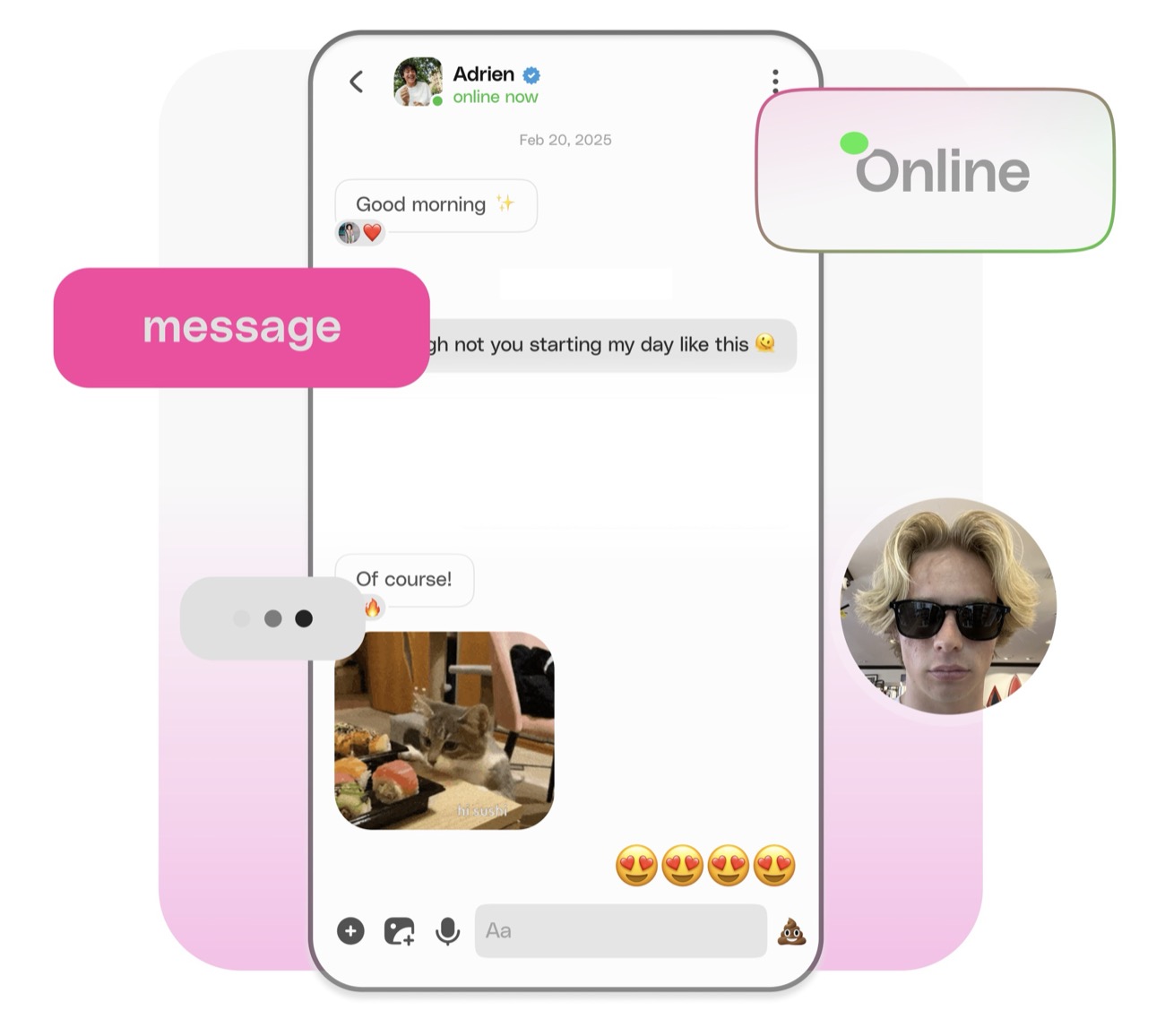
“Wizz is a social discovery app built specifically for Gen Z, a place where people can meet others their age and have real one-on-one conversations, without the pressure and noise that comes with most social platforms today.”
“The experience is deliberately simple. There are no followers, no likes, no public performance metrics. You’re not building an audience or competing for attention. Instead, Wizz shows you other real people your age, in your country, and online right now. There is no algorithm that determines who is worthy of your time. Wizz App simply presents you with individuals who are available for connection.”
“That simplicity is intentional. We looked at what social media had become, the viral content, the comparisons, the highlight reels, and we went in the opposite direction. Gen Z is one of the loneliest generations on record, and we don’t think that’s a coincidence. These platforms were built to keep people scrolling, not to help them actually connect. Wizz was built to do the one thing social media originally promised: help you meet people you wouldn’t have met otherwise.”
“But connection only happens when people feel safe enough to show up as themselves, which is why safety isn’t something we added later, it’s been part of the foundation from day one. We’ve listened closely to our users, and what they told us is simple: they wanted somewhere that felt both fun and genuinely safe. That’s what we’ve worked hard to build, because without that trust, none of the rest matters.”
Challenges Faced
Have you faced any challenges in your sector of work recently? Donninger acknowledged:
“The biggest challenge in our space right now is trust. Social media has a serious reputation problem, and platforms built for engagement at any cost have left Gen Z more anxious, isolated, and exposed to harm.”
“The practical side of that is safety at scale. Threats evolve constantly, and the line between harmful and innocent isn’t always clear. Our answer has been to stop treating safety as fixed rules and start treating it as something that learns and adapts, anticipating problems before they surface.”
“Here’s one example: since 2020, we’ve been estimating users’ ages at sign-up. We now compare every profile photo to that age scan, which verifies that every profile shows the real person behind it. That eliminates impersonation and keeps the platform bot-free. When users recently tried to bypass this with AI-generated photos, our safety partners had already built systems to detect and flag those cases.”
“Safety is about constantly evolving and anticipating. And while companies can do a lot alone, it’s more effective when the industry works together. We’re proud members of Tech Coalition and the Internet Watch Foundation, which helps us share intelligence and stay ahead of emerging threats.”
Evolution Of The Company’s Technology
How has the company’s technology evolved since launching? Donninger noted:
“When we started, the app was intentionally simple, I mentioned that we built the first version in two days. At its core, Wizz does one thing: it puts you in front of real people your age, near you, who are online right now. You open the app, you find someone, you start talking.”
“What’s evolved is everything underneath. Our safety tools have gone from basic filters to systems that understand context, not just content. For example, we now compare every user’s first profile photo to their age estimation scan, ensuring every profile shows the real person behind it. That eliminates impersonation and keeps the platform bot-free.”
“The biggest shift has been moving from reactive to anticipatory, adjusting ahead of time rather than after damage is done. And we don’t do it alone. As members of Tech Coalition and the Internet Watch Foundation, we’re part of a broader industry effort to share intelligence and stay ahead together.”
“The product has grown, but the promise has stayed the same: the simplest possible way to meet someone new.”
Significant Milestones
What have been some of the company’s most significant milestones? Donninger cited:
“Three moments stand out the most. The first was hitting one million daily active users. As we were building the app, we wanted it to grow. At the beginning, it was just an experiment. We obsessed over tweaking the experience, trying to improve by a few percentage points, but never expected it to grow as fast.”
“The second was crossing one million dollars in revenue. It proved we could build something people valued enough to pay for while staying true to our mission. That milestone gave us a sustainable path forward and also the ability to invest in the right tools and people that would build what Wizz is today.”
“The third, we announced recently: joining Tech Coalition, and specifically, being the first company ever to earn membership after completing their six-month Elevate program.”
“It was an intensive process where we overhauled our safety standards, improved detection tools, established reporting protocols with top safety organizations, and demonstrated we could meet the same standards as companies like Google, Meta, and Microsoft. Our entire team was involved. We participated in masterclasses, attended talks with other member companies and makes sure every person on our team receives updated training.”
Customer Success Stories
Can you share any specific customer success stories? Donninger highlighted:
“The stories that stay with me aren’t the big numbers of gains. It’s the messages from individual users who found their people through Wizz during a time when they felt completely alone. Gen Z who moved to a new city, started at a new university, or just went through a period where their social world felt very small. Some have formed friendships that have lasted years. That’s what we built this for. The metrics matter, but they’re not the point. The point is that loneliness is genuinely painful, especially when you’re a young adult, and if Wizz helps someone find their way out of it, that’s the success story that matters most.”
Total Addressable Market
What total addressable market (TAM) size is the company pursuing? Donninger assessed:
“Gen Z is roughly two billion people globally, the first generation to grow up entirely online, and by most measures, the loneliest. That tension between being hyper-connected and deeply isolated is exactly the problem Wizz exists to solve.”
“What makes this market significant is the shift that’s happening within it. Gen Z is actively moving away from platforms that have made them feel worse about themselves, and looking for something more human. We’re positioned directly in the path of that change.”
Differentiation From The Competition
What differentiates the company from its competition? Donninger affirmed:
“Wizz doesn’t work like social media. Most platforms today are built around content: feeds, viral posts, public performance. We went in the opposite direction. Wizz is built around people.”
“There are no likes, no followers, no comment sections, no history of what you posted last week. Just profiles of real people around your age, in your country, who are online and looking to connect. You’re not building an audience or curating a persona. You’re just meeting someone new and having a conversation.”
“That fundamental difference changes everything. Without the performance metrics, there’s no pressure to present a perfect version of yourself. Without the viral mechanics, there’s no incentive to be provocative or controversial just to get attention. It’s one-on-one, private, and focused entirely on the interaction between two people forming a connection and potentially becoming new friends.”
“In a landscape where most platforms have become stages, serving the crowd, Wizz is a conversation. That’s what makes it different, and that’s why it works for Gen Z. They’re not looking for another place to perform. They’re looking for a place to actually connect.”
Future Company Goals
What are some of the company’s future goals? Donninger emphasized:
“At Wizz, our future goals are closely tied to the evolution of our community. More than five years ago, we created Wizz as a safe space for people to build community, make new friends, and express themselves as they are. As our users grow up, so do we.”
“Today, many of our early Gen Z users are now college-aged, and we’re placing a stronger focus on supporting this adult audience. We’re launching initiatives tailored specifically to college students, programs that help them navigate new cities, build networks on campus, and find their people during a time when connection matters most. We’re also introducing features designed to enhance meaningful connections and self-expression for young adults who are figuring out who they are and where they belong.”
“Moving forward, our priority is to keep innovating in ways that reflect the needs of our maturing community while staying true to our core mission: helping people find real connection in a digital world that often feels anything but.”
Additional Thoughts
Any other topics you would like to discuss? Donninger concluded:
“One thing I think is worth mentioning is how we’re thinking about the future of connection itself. Right now, most social platforms are designed around a single layer of interaction: posting, liking, commenting. But human connection is more nuanced than that. It happens in different contexts, at different life stages, and with different levels of depth.”
“As our community matures, we’re exploring how Wizz can evolve to support those multiple layers. That might mean different spaces for different types of connection, or features that reflect where people are in their lives, whether that’s starting college, moving to a new city, or navigating adulthood for the first time. We’re listening closely to what our users tell us they need as they grow, and we’re building accordingly.”
“Our goal is not to cater to everyone’s needs. It’s to stay focused on what we do best, facilitating real human connection, while adapting to serve the people who’ve grown up with us.”
