Wordly is an AI-powered translation and captioning platform designed to make multilingual communication more inclusive and accessible across meetings, events, classrooms, government settings, and other environments. Founder and CEO Lakshman Rathnam has a background in human-machine interfaces, acoustics, and audio technologies and holds more than 25 patents in these areas. Pulse 2.0 interviewed Wordly Founder and CEO Lakshman Rathnam to learn more about AI translation, accessibility, and the company’s growth.
Lakshman Rathnam’s Background
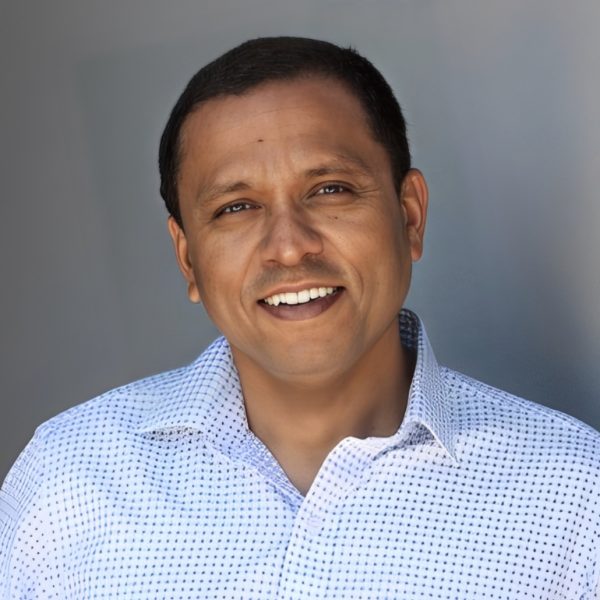
Wordly Founder and CEO Lakshman Rathnam

When asked about his background, Rathnam shared:
I’m the Founder and CEO of Wordly, where I focus on building AI-driven solutions that make communication more inclusive and accessible.
My background is in human-machine interfaces, acoustics, and audio technologies, and I hold more than 25 patents in these areas.
Prior to Wordly, I spent my career developing and scaling enterprise technology products, which ultimately led me to the opportunity to apply AI to resolve one of the most universal challenges: language barriers.
How Wordly Started
When asked how the idea for the company came together, Rathnam explained:
The idea for Wordly was sparked by a deeply personal experience. At a global conference in Japan, I was surrounded by experts sharing valuable insights, yet I couldn’t understand a single word.
I was physically present, but effectively excluded, not because of a lack of expertise, but because of language.
That moment stayed with me. It underscored how easily important ideas are lost when people can’t understand one another, and how limited traditional solutions like in-person interpreters are, given their cost, complexity, and lack of scalability.
It also made clear to me that technology could bridge this gap.
That experience became the foundation for Wordly. Today, the platform is used by over 6 million people across 60+ languages, helping organizations make meetings, events, sermons, and classrooms more inclusive through real-time AI translation and captioning.
Favorite Memory
When asked about his favorite memory working for the company so far, Rathnam said:
One of the moments that’s stuck with me most wasn’t a big launch or announcement; it was hearing a Spanish-speaking community member speak up confidently during a city meeting for the first time.
Before, they likely wouldn’t have even attended because if you can’t understand the discussion, it’s almost impossible to weigh in on decisions that directly impact you and your family.
With Wordly, they were able to follow the debate in real time and jump in without hesitation.
That same impact shows up in different ways: a student who once felt like an outsider because of language barriers finally understanding a lesson in a way that builds confidence and a true sense of belonging, someone at a church service hearing words of faith and encouragement in a moment they truly need it, or conference attendees gaining richer discussions and better ideas from diverse global perspectives.
Those moments make it real. They’re a reminder that what we’re building goes beyond just technology and gives people a voice where it truly matters.
Core Products And Features
When asked about Wordly’s core products and features, Rathnam detailed:
Wordly provides a comprehensive real-time AI platform for multilingual communication, including:
- Real-time translation, audio and captions
- Live captioning and subtitles
- Transcripts and post-event summaries
- Support for in-person, virtual, and hybrid events
- Integration with platforms like Zoom, Microsoft Teams, and Webex
- Custom glossaries to improve translation accuracy
All of this is delivered through a single, easy-to-use SaaS platform accessible via a tabletor mobile device. No special equipment is required.
What truly sets Wordly apart is how effortlessly it removes language as a barrier to participation.
Organizations can instantly scale communication across dozens of languages without the cost, complexity, or scheduling challenges of human interpreters, making every meeting, event, or interaction more inclusive and productive.
Whether it’s a global town hall, a government meeting, a classroom, or a community event, Wordly ensures every voice can be heard and understood in real time, helping organizations expand their reach, improve engagement, and meet growing accessibility expectations with confidence.
Building Trust In AI Translation
When asked about recent challenges in the sector and how Wordly has addressed them, Rathnam explained:
One of the biggest challenges has been overcoming skepticism around AI, particularly the perception that it’s either unreliable or somehow a step backward from in-person communication.
For years, organizations associated accuracy and trust exclusively with human interpreters, and more recently, concerns about AI quality have added another layer of hesitation.
We’ve addressed this head-on by showing how AI, when applied thoughtfully, can actually strengthen human connection rather than replace it.
Wordly is built specifically to make communication more inclusive, not less, and accuracy is central to that mission.
Features like our custom glossary allow organizations to train the platform on their unique terminology, names, and industry language, dramatically improving translation precision in real-world settings.
Combined with continuous improvements in our AI models, this gives customers confidence that what’s being said is not only translated instantly, but translated correctly.
As a result, we’re helping shift the narrative by proving that AI can be both powerful and trustworthy when it’s designed with purpose.
How The Technology Has Evolved
When asked how Wordly’s technology has evolved since launching, Rathnam said:
Since launching in 2019, Wordly has evolved from a solution focused on in-person events to a fully integrated platform supporting virtual, hybrid, and on-demand use cases. Over the past year, we’ve expanded the platform to support more of the event lifecycle, as an always-on communication layer that can support audiences before, during, and after an event.
We’ve significantly expanded both the depth and intelligence of the platform, including:
- Natural-sounding AI voices that make translations more conversational and easier for global audiences to follow, improving comprehension and engagement in real time
- Automatic language detection that instantly identifies the spoken language without manual setup, making the platform faster to deploy and more reliable in live, fast-moving environments
- Customizable glossaries that allow organizations to train the system on their own terminology, including industry-specific language, acronyms, product names, and proper nouns. This results in significantly higher translation accuracy and greater consistency across communications.
- Advanced video captioning capabilities that extend accessibility and multilingual support beyond live events into recorded and distributed content
- Robust APIs that enable seamless integration of Wordly into existing platforms, workflows, and enterprise systems, making multilingual communication part of the broader tech ecosystem rather than a standalone tool
The platform now supports thousands of language pairs and multiple output formats, including audio, captions, transcripts, and summaries.
These improvements make Wordly adaptable to virtually any communication scenario while continuing to improve in accuracy, scalability, and ease of use.
Key Company Milestones
When asked about some of Wordly’s most significant milestones, Rathnam highlighted:
-
- Launching the first AI translation solution for events in 2019
- Reaching 1 million users within three years
- Scaling to over 6 million users globally
- 1 billion minutes of live translation and captions
- Being named the 521st fastest-growing privately held company in the United States on the Inc. 5000 list.
- Supporting thousands of organizations across corporate, government, education, and nonprofit sectors
- Processing hundreds of millions of minutes of translated content
These milestones reflect both strong product-market fit and growing demand for accessible communication.
Customer Success Stories
When asked to share specific customer success stories, Rathnam explained:
We’ve seen powerful success stories across a range of environments, from civic spaces and religious institutions to classrooms and global stages.
In local government, the City of Sunnyvale, CA is a great example of what inclusive communication can look like in practice. With Wordly, a Spanish-speaking Commissioner can now fully participate in meetings in real time.
They can ask questions, contribute ideas, and engage with peers without delay. The result is a more representative decision-making process that reflects the community it serves, often described as a “mini United Nations Council.”
At the same time, the city has reduced interpretation costs by up to 55%, while increasing civic participation among non-English-speaking residents who now feel they truly have a voice.
On the global stage, Japan’s largest technology event, CEATEC, adopted Wordly to meet growing demand for multilingual access.
The technology was put to the test during a keynote delivered by Japan’s Prime Minister, where accuracy and timing were critical. Wordly performed at the highest level, demonstrating that AI translation is ready for large-scale, high-profile international events.
In education, PS 69 in New York has used Wordly to support multilingual learners in the classroom.
Students can follow lessons in real time with translated captions, allowing them to work independently without relying on classmates.
This has reduced confusion, increased participation, and helped students feel more confident and included, while enabling teachers to maintain the flow of instruction without disruption.
And, in faith-based settings, Christ Community Church used Wordly to welcome more attendees than ever before, achieving its highest Easter attendance in its 40-year history.
By removing language barriers, the church created a more inclusive and accessible experience, allowing people from different linguistic backgrounds to fully engage in the service.
Across all of these examples, the outcome is consistent: greater engagement, broader participation, and more inclusive experiences for people regardless of the language they speak.
Funding And Growth
When asked about funding and revenue metrics, Rathnam said:
Wordly is a privately held company. We’ve raised early-stage funding and have focused on building a capital-efficient business with strong customer growth and recurring SaaS revenue.
We have over 5,000 customers in 120 countries.
Total Addressable Market
When asked about the total addressable market Wordly is pursuing, Rathnam explained:
We’re operating at the intersection of several large and growing markets, including event technology, enterprise collaboration, and language services.
Given the global nature of business, education, and government, virtually every organization that hosts meetings or events is a potential customer.
As multilingual participation becomes the norm, we see this as a multi-billion-dollar global opportunity.
Competitive Differentiation
When asked what differentiates Wordly from its competition, Rathnam said:
We pioneered this category early, which has allowed us to build deep expertise and continuously innovate ahead of the market.
A big part of that innovation comes from listening closely to customers and incorporating their feedback directly into the platform.
The product keeps getting better in the ways that matter most in live environments.
Other factors that set Wordly apart include:
- AI-first approach that eliminates the need for the complexities of scheduling in-person interpreters
- Ease of use that doesn’t require hardware, downloads, or complex setups
- Cost efficiency in having multiple languages available on demand for the cost of a single interpreter
- All-in-one platform that combines translation, captions, transcripts, and summaries
- Scalability across thousands of participants and languages
- High accuracy powered by customizable glossaries that ensure correct translation of industry-specific terminology, names, and context. This is critical for maintaining precision in real-world use cases.
Future Goals
When discussing Wordly’s future goals, Rathnam explained:
Our vision goes beyond improving translation quality or adding more languages; we’re working toward a future where language is no longer a barrier to human connection.
We’re building technology that makes communication feel completely natural and seamless, where people can speak in their own language and be instantly understood by anyone, anywhere.
In that world, language becomes invisible, no friction, no delay, no exclusion.
A big part of getting there is staying closely connected to our customers. Listening to how they communicate, where they face friction, and what they need to be successful.
That feedback directly shapes how we evolve the platform and prioritize new capabilities.
We’re continuing to advance translation accuracy, expand language coverage, and deepen integrations with the tools people use every day.
But ultimately, our goal is to enable truly universal understanding, so that ideas, collaboration, and participation are never limited by the language someone speaks.
The Future Of Inclusive Communication
When invited to discuss another topic, Rathnam concluded:
One important trend is the rising expectation of true inclusivity.
Language access is becoming a core requirement in all areas of our lives for engagement, compliance, and equity.
AI is now making it possible to deliver that level of access at scale, in real time, without compromise.
We believe this shift is fundamentally reshaping global communication and enabling people and organizations to compete and excel in a global economy.
We’re also seeing AI translation improve outcomes in everyday life, from classrooms and places of faith to civic participation and community decision-making.
As language barriers come down, more people can fully participate, contribute their perspectives, and help shape the communities they live in.

