

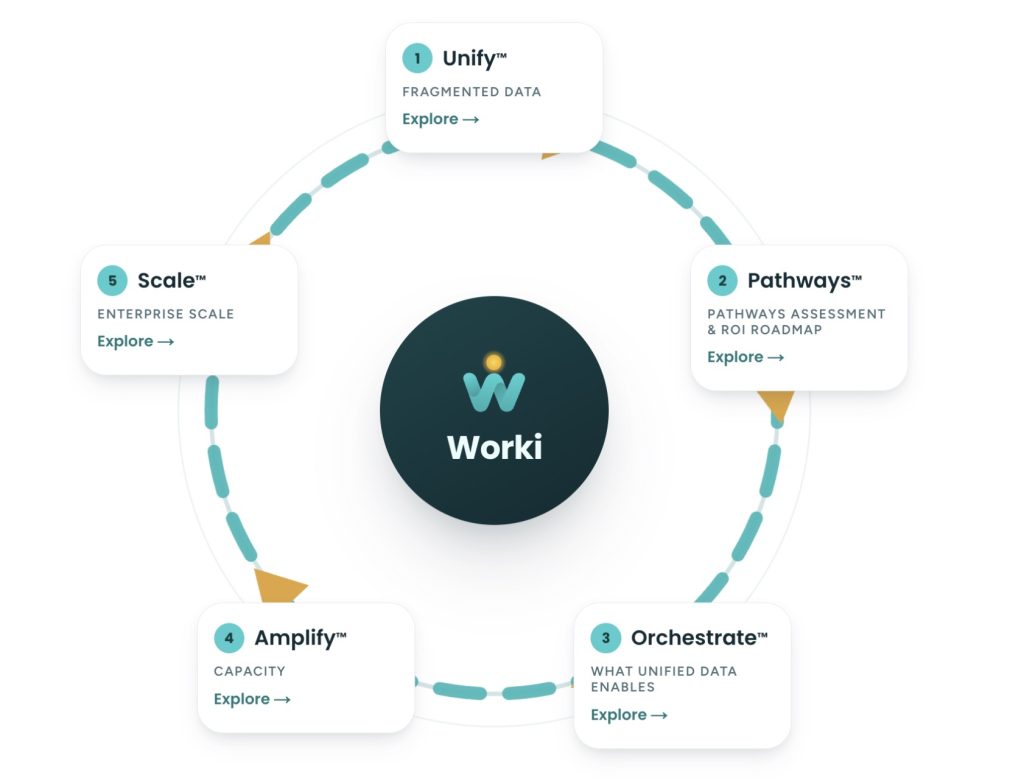
Worki is developing workforce infrastructure designed to help healthcare organizations integrate AI into complex operational environments while keeping people in control of critical decisions. Its platform brings together three core workforce products—Career Amplifier, JD Modernizer, and Scheduling Coordination—within a five-tier Workforce Unifying Infrastructure that includes Unify, Pathways, Orchestrate, Amplify, and Scale. Together, these layers connect fragmented workforce systems, help organizations identify opportunities for improvement, coordinate people and workflows, strengthen workforce teams, and support more connected operations across the enterprise.
Pulse 2.0 interviewed Worki AI Co-Founder and CTO Harvey Hongwei Li to learn more about AI-powered workforce transformation, healthcare automation, and the company’s vision for helping humans and AI work together.
Harvey Li’s Background
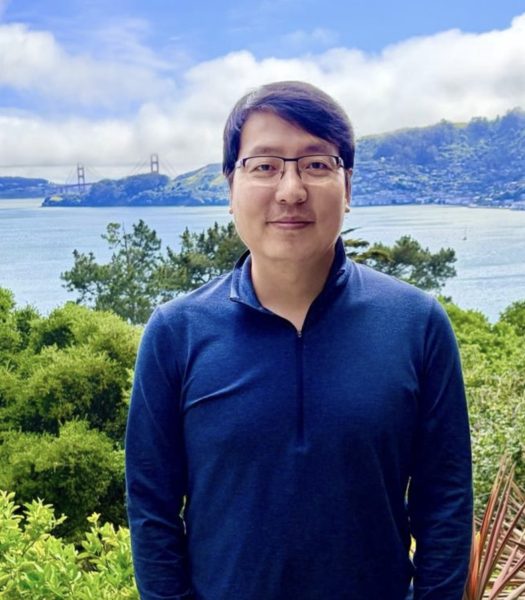
When asked about his background, Li shared:
I came to the U.S. more than 16 years ago and earned my Ph.D. from the University of California, Berkeley, where I focused on machine learning and AI.
Berkeley really shaped the way I think about technology and innovation. While at Berkeley, I was drawn to entrepreneurship and the idea of building products that create real value in the world.
After graduation, I had opportunities across tech, finance, and academia, but I chose to join Uber very early on because I loved the startup energy and the people there.
I was one of the founding team members of Uber’s Customer Support division and led some of the company’s earliest machine learning, AI, and data science initiatives.
At the time, Uber was scaling globally at an incredible pace, and customer support alone was costing the company hundreds of millions of dollars annually.
Our mission was to use AI and automation to help scale operations more efficiently while improving the user experience.
That experience was incredibly formative for me because it taught me how to build AI systems and products at massive scale.
I worked across several parts of Uber over four years, including customer support, Uber Freight, Uber Safety, and new business initiatives, during one of the company’s most intense growth periods.
After Uber, I joined Airbnb in 2019 as one of the early machine learning hires for Airbnb Lux.
Shortly after, the pandemic hit, and I experienced firsthand how leadership navigates crisis and uncertainty at scale.
During that time, I also started building things outside of work, including a nonprofit that helped people impacted by layoffs and a side startup.
That period really reignited my entrepreneurial mindset.
I became increasingly interested in finding where AI could create the most meaningful real-world impact.
I spent a lot of time speaking with people across industries like insurance, logistics, real estate, and healthcare.
The more conversations I had, the clearer it became that healthcare had some of the biggest opportunities and toughest operational challenges, especially around automation, augmentation, and personalization.
That ultimately led me to Worki and my focus on applying AI in healthcare, where I believe the technology can have a truly meaningful impact on both providers and patients.
Why Healthcare Has Lagged In AI Adoption
When asked why healthcare has lagged behind industries like technology in adopting AI and automation at scale, Li explained:
I actually see a lot of similarities between healthcare today and what I experienced earlier at Uber, especially around workforce pressure and operational complexity.
One of my first major projects at Uber was within customer support.
At the time, Uber had tens of thousands of people globally handling support tickets across more than 300 cities globally.
We studied the workforce very closely and found that attrition was extremely high.
Customer support work is stressful, emotionally draining, and highly repetitive.
People are under constant pressure dealing with angry customers, complex issues, and demanding schedules.
When I look at healthcare, especially frontline operational teams and junior staff, I see many of the same patterns.
There’s burnout, staffing shortages, high stress, and systems that are not designed to support people effectively at scale.
What we learned at Uber is that AI is not about replacing people.
The most effective systems are the ones where AI works alongside humans to augment them.
For example, we built AI systems that learned the strengths and weaknesses of different support agents over time.
Based on that understanding, the system could dynamically route tickets to the person most likely to resolve them successfully and efficiently.
That improved both customer outcomes and employee experience.
Later, we introduced AI copilots for support teams.
In the beginning, the AI would simply observe workflows and recommend possible responses.
Over time, as confidence improved, the AI could draft responses automatically, while humans reviewed and approved them.
Eventually, certain repetitive and low-risk workflows could become fully automated.
The key idea was never “AI replaces humans.”
It was: how do humans and AI work together in parallel?
Some tasks are automated, some are augmented, and some still require full human judgment.
When you combine those effectively, you reduce pressure on staff while improving quality and efficiency at the same time.
I think healthcare is still early in that journey because the environment is much more complex, highly regulated, and deeply human-centered.
Trust matters a lot more.
But at the same time, that’s exactly why the opportunity is so big.
There are many areas where AI can reduce administrative burden, support decision-making, and help healthcare professionals focus more of their time and energy on patient care.
How Worki Came Together
When asked how the idea for Worki came together and what makes the founding team uniquely positioned to build it, Li said:
The idea for Worki really came from a combination of my experiences across AI, large-scale operations, and workforce systems over the past several years, as well as the experiences and backgrounds that the other founding team members bring with them from across healthcare workforce operations, startup scaling, and commercial strategy.
Our CEO, Craig Ahrens, brings 20 years of experience in healthcare workforce operations and startup scaling.
Our CCO, Michael Biggs, has 30+ years of experience in healthcare management leadership, finance, and consulting.
Our experiences came together and we formed the realization that many of the same workforce problems exist across various industries, burnout, staffing shortages, operational pressure, fragmented workflows, and systems that create friction instead of support.
At the same time, I felt the broader AI industry was moving toward a very important inflection point.
The technology world has evolved very quickly from machine learning to large language models, prompt engineering, and now AI agents.
But I’ve believed for years that the future is not humans versus AI.
The future is humans working together with AI, and that’s really the core philosophy behind Worki.
We’re not building AI to replace workers but to amplify people, reduce operational burden, and help organizations support employees more effectively.
Internally, we sometimes think about this as an “Employee Success Platform,” applying some of the same principles companies use for customer success toward supporting the workforce itself.
What excites me most is figuring out how to design systems where AI and humans can collaborate naturally inside messy, real-world workflows.
Humans are incredibly good at handling ambiguity, empathy, and complex judgment.
AI is incredibly good at speed, automation, pattern recognition, and operating continuously.
The challenge, and in my view opportunity, is combining those strengths in a way that actually improves work instead of disrupting people.
And honestly, that’s why I believe in our team so strongly.
I don’t think this is about one individual person.
I think we have a team that deeply understands both the technical side of AI systems and the human side of operational workflows.
That combination is very rare, especially in healthcare.
Our goal is to help build a future where AI strengthens the workforce rather than replaces it, starting in healthcare, where the need is especially urgent.
Core Products And Features
When asked about Worki’s core products and features, Li explained:
From a product perspective, two of our major offerings today are Career Amplifier and JD Modernizer.
Career Amplifier is an AI-powered career guidance platform designed to help healthcare employees better understand internal career pathways and long-term growth opportunities inside their organization.
One of the big problems in healthcare today is that employees often don’t have visibility into where they can grow, what skills they need next, or what opportunities already exist internally.
Career Amplifier helps personalize that journey at scale.
The goal is not just retention, but helping people feel more connected to their long-term future within the health system.
JD Modernizer helps health systems modernize and manage job descriptions at scale using AI-powered standardization and workforce analytics.
Instead of manually updating hundreds or thousands of disconnected job descriptions one by one, the platform helps organizations streamline updates, standardize skills and role requirements, identify gaps or inconsistencies, and keep workforce data more current across the system.
ShiftSense Scheduling Coordination helps healthcare organizations coordinate shift coverage, float pools, and open shifts while working alongside their existing scheduling systems.
Together, these products are supported by Worki’s Workforce Unifying Infrastructure, which connects existing workforce systems across five areas—Unify, Pathways, Orchestrate, Amplify, and Scale. This infrastructure system is how it all works.
The first step is Unify, which solves the fragmented data problem.
Healthcare workforce data is scattered across HR systems, scheduling systems, credentialing platforms, learning systems, payroll tools, and many other disconnected platforms.
Worki connects those systems into a unified workforce intelligence layer while allowing existing infrastructure to stay in place.
Once the data is unified, leaders can identify where to start.
The second layer is solving what we call the “Where to Start” problem through Pathways.
Healthcare leaders know AI is coming, but most organizations do not have a clear roadmap for how workforce transformation should happen.
Pathways creates a dynamic map of workforce roles, operational workflows, and AI opportunities using research, proprietary workforce datasets, and de-identified coalition data from health systems.
The goal is to provide organizations with a phased, realistic approach to workforce amplification instead of overwhelming disruption.
Orchestrate is where unified workforce intelligence can be translated into coordinated action across workflows and systems. Governed AI agents can research, identify opportunities, and coordinate tasks while the Human Conductor remains responsible for approvals and decision-making.
Then comes Amplifiers, which are governed AI agents that actually help support and improve workforce operations.
Some agents focus on researching and optimizing employees’ goals and daily tasks, while others help orchestrate workflows across systems.
But one thing that’s very important to us philosophically is that there is always a human in control.
We call this role the “Human Conductor.”
AI can assist, automate, and surface recommendations, but humans retain decision authority.
The final tier, Scale, extends the infrastructure across the enterprise and enables the benefits of Worki’s architecture to compound over time. As more roles, workflows, and systems are connected, organizations can expand AI-enabled workforce operations without replacing the infrastructure they already have, creating a foundation for broader enterprise adoption and, ultimately, coalition-level intelligence through Worki’s Infrasharing model.
Key Company Milestones
When asked about some of Worki’s most significant milestones, Li highlighted:
Worki has gained very strong momentum and validation in a relatively short period of time, both from investors and from healthcare systems themselves.
On the investor side, we recently closed a $2.75 million pre-seed round led by Redesign Health and Healthliant Ventures, which is the venture arm of Tanner Health System.
For us, that validation is meaningful because these are groups that deeply understand healthcare operations and the long-term challenges facing the workforce.
What really excites me is the traction from health systems directly.
We’re already working with organizations like Tanner Health, BJC Healthcare, and several other large systems across the country, with additional partnerships and expansions actively underway.
Competitive Differentiation
When asked what differentiates Worki from its competition, Li explained:
There are several fundamental ways we’re different from competitors.
First, we’re not asking health systems to rip out and replace everything they already have.
That’s one of the biggest problems in healthcare technology today.
Most legacy HRIS vendors require massive migrations and consolidation projects that are extremely expensive and disruptive.
Our philosophy is very different.
Instead of forcing organizations onto one monolithic platform, we integrate across the fragmented systems they already use and help them work together intelligently.
The idea is to create interoperability and intelligence without requiring a painful rebuild of the entire organization.
Second, most AI systems today are still operating at a very high level of abstraction.
They infer broad skills or generate generic recommendations.
What we focus on is task-level intelligence.
In healthcare, work is incredibly nuanced.
Success depends on understanding the actual operational tasks happening in real workflows, not just job titles or generalized competencies.
That level of specificity is important because it allows AI to safely support real-world operational work instead of just acting like another dashboard or chatbot.
Third, we believe in amplification over replacement.
A lot of the conversation around AI today is about eliminating jobs or replacing workers.
We think that’s the wrong framework, especially in healthcare.
Healthcare already has workforce shortages, burnout, and operational overload.
The goal should not be removing people.
The goal should be helping people operate at a much higher level by reducing administrative burden, simplifying workflows, and allowing workers to focus on the parts of the job where humans create the most value.
For us, infrastructure comes before intelligence.
If you build the right infrastructure layer between humans and AI, you can create systems where people become dramatically more effective without creating fear or disruption inside the workforce.
Future Goals
When discussing Worki’s future goals, Li explained:
In the near term, we’re very focused on continuing to scale the platform, deepen partnerships with health systems, and expand the network effect across the ecosystem.
To support that growth, we anticipate raising a larger Seed or Series A round in the future.
But the bigger vision is much larger than just building another healthcare SaaS company.
What we’re building is much closer to infrastructure.
We sometimes compare the long-term model to something like the Visa network.
Visa does not own every bank, but it provides the rails that allow the ecosystem to operate efficiently together.
That’s very similar to how we think about healthcare labor.
As more health systems join the network, the intelligence compounds.
The workflows become smarter, the operational friction decreases, and the economics improve for everyone participating.
Healthcare is the first focus because the fragmentation problem is incredibly severe and the need is urgent.
But long term, I believe this challenge exists across many industries that have complex operational workflows, labor shortages, and highly regulated environments.
Industries like logistics, education, public sector organizations, municipalities, they all face similar structural problems.
So while healthcare is where we are starting, the broader vision is building infrastructure that helps humans and AI work together much more effectively across large-scale industries overall.
