

ZIGChain is a Cosmos-based Layer 1 blockchain designed as a “Wealth Management Engine” to democratize access to institutional-grade investment strategies and tokenized real-world assets (RWAs) for everyday users. Pulse 2.0 interviewed ZIGChain co-founder Abdul Rafay Gadit to learn more.
Abdul Rafay Gadit’s Background
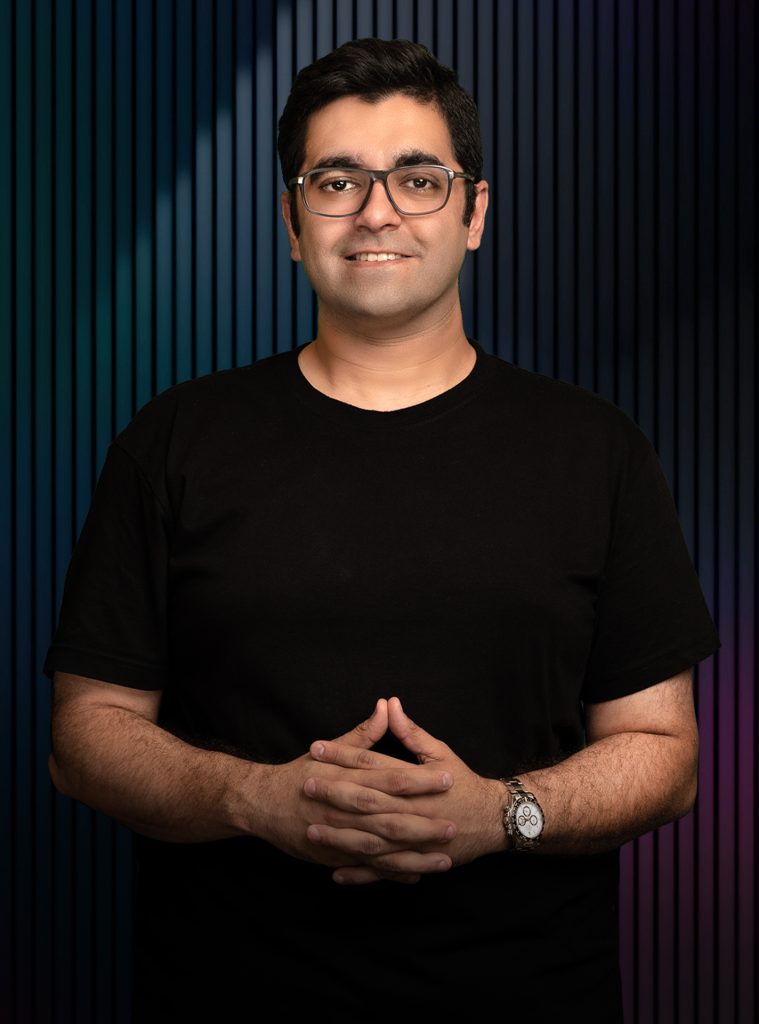
Could you tell me more about your background? Gadit said:
“I’ve spent more than a decade working at the crossroads of blockchain, fintech, and digital asset infrastructure, so I’d describe myself as both a technologist and a serial entrepreneur. Prior to co-founding Zignaly in 2018, I co-founded Cloudways that achieved a successful exit in Q1 2022 when it was acquired by DigitalOcean for $350 million. This experience gave me deep insights into scaling technology and building resilient businesses.”
“Zignaly started as an idea to make investing more collaborative and accessible. Today, it’s grown into a social-investing platform serving over half a million users worldwide and managing millions in assets on their behalf. Along the way, I’ve built and scaled high-throughput systems and helped shape regulated financial infrastructure across different markets. What motivates me now is the same vision I had at the beginning: using blockchain as a bridge between traditional finance and decentralized finance. My goal is to make wealth creation something that anyone can access, regardless of income, where they live, or how technical they are.”
Formation Of The Company
How did the idea for the company come together? Gadit shared:
“The idea for the company came together as a direct response to scaling limitations related to yield opportunities rather than blockchain technology itself. Zignaly originally operated on centralized exchanges and faced challenges in offering diverse and scalable yield-generating options, which led to identifying the need for a Layer 1 blockchain optimized for wealth management.”
“With ZIGChain, we set out to build on-chain infrastructure that could natively support tokenized investment products, multi-asset portfolios, and global accessibility. In many ways, it’s the evolution of our journey at Zignaly, taking years of battle-tested, CEX-grade infrastructure and reimagining it in a fully decentralized environment. The vision is simple: instead of just one platform, create an entire ecosystem where developers, asset managers, and protocols can design and launch new wealth-generation strategies.”
Favorite Memory
What has been your favorite memory working for the company so far? Gadit reflected:
“There have been many milestones, but one that stands out is the moment we realized the concept truly worked; when developers and asset managers were able to integrate seamlessly without the operational bottlenecks that usually hold things back in traditional finance. That was a real turning point, because it showed us that we were solving a genuine problem.”
“Another favorite memory was our very first ecosystem call. Seeing multiple partners present live on how they were building on ZIGChain was incredible, it felt like the vision we had on paper was finally coming to life through the community. Moments like that make all the challenges worthwhile.”
Core Products
What are the company’s core products and features? Gadit explained:
“ZIGChain’s ecosystem is built on a robust modular architecture, with the Wealth Management Engine (WME) serving as the heart that drives the creation, management, and distribution of on-chain investment strategies. This core framework operates within a powerful body formed by the Cosmos SDK and CosmWasm-based tech stack, which supports Rust smart contracts and enables a flexible, scalable environment where all other modules and features thrive.”
“Interoperability is another key priority. ZIGChain is IBC-enabled to connect seamlessly with other Cosmos chains, and we’re extending that with planned connectivity to other networks as well. On top of that, we’ve built high-performance infrastructure designed for the demands of financial applications: transactions finalize in under five seconds, fees are low, and the system supports modular upgrades.”
“Finally, because an ecosystem only grows with its developers and partners, we’ve launched a $100 million ecosystem fund, foundation-led programs, and extensive technical documentation to onboard and support builders.”
Challenges Faced
Have you faced any challenges in your sector of work recently,and how did you overcome those challenges? Gadit acknowledged:
“Like anyone building at the intersection of blockchain and finance, one of the biggest challenges we’ve faced has been regulatory uncertainty, especially around tokenized assets and DeFi. Our approach has been to work with licensed asset management entities, Zignaly itself holds an FCSA CAT II license, so that compliance is handled properly, even as the chain itself remains permissionless. That balance allows us to innovate while still protecting users and meeting regulatory expectations.”
“Another challenge has been translating the kind of user experience people expect from centralized platforms into a decentralized environment. Instead of making every project rebuild the wheel, we designed native modules for wealth management directly into the chain. That way, developers can focus on innovation while relying on infrastructure that already handles the complexities of portfolio management at scale.”
Evolution Of The Company’s Technology
How has the company’s technology evolved since launching? Gadit noted:
“Our journey began in 2018 as a signal provider platform, which quickly evolved into a copy trading platform. Eventually, the platform took its current form as a profit-sharing platform offering fund management and pooled accounts. This model allowed us to find real scale; however, because the platform operated exclusively on centralized exchanges (CEXes), it was limited in the yield opportunities we could offer users.”
“As decentralized finance (DeFi) grew and new yield opportunities emerged, we saw the need to bring these benefits directly to our users. This realization drove us to build our own blockchain ecosystem tailored for wealth management and yield generation.”
“Rather than integrating programmable compliance or decentralized identity modules at this stage, our focus has been on combining the existing platform with a dedicated chain ecosystem. This ecosystem includes decentralized exchanges (DEXes), liquid staking, meme token launchers, and innovative partnerships around real-world asset tokenization, all designed to unlock new yield and growth possibilities for users.”
“In summary, we have evolved from building a platform focused on profit-sharing within centralized exchanges to creating an open, modular blockchain ecosystem that broadens access to DeFi yield strategies and financial innovation.”
Significant Milestones
What have been some of the company’s most significant milestones? Gadit cited:
“We’ve had quite a few defining moments on this journey. One of the biggest was simply making it through the 2022 bear market, building and growing during that period tested our resilience as a team and as a project. Another major milestone was our Token Generation Event back in April 2021, which laid the foundation for everything we’ve built since.”
“On the technology side, we launched pre-mainnet staking on Ethereum and BSC, and more than 13%-14% of our circulating supply was staked even before mainnet, a strong signal of community confidence. We also integrated with key infrastructure providers like Numia for data indexing and analytics, Stork as an oracle layer, and Axelar and Skip for cross-chain bridging. Each of these partnerships has been instrumental in strengthening the ecosystem.”
“And of course, a landmark ahead of us is the upcoming mainnet launch, after the successful February 2025 testnet, something we’ve been gearing the entire ecosystem toward.”
“We’ve also forged strategic partnerships with Apex Group, Ellington Properties and Valereum, which are key to expanding our reach into regulated real-world asset tokenization and institutional adoption.”
Customer Success Stories
Can you share any specific customer success stories? Gadit highlighted:
“One standout success story is Oroswap, a decentralized exchange built by members of the Zignaly community. They went from concept to a live DEX on ZIGChain’s testnet in under two months by leveraging our modular architecture and extensive developer support.”
“Beyond Oroswap, we’ve seen organic growth from builders within the existing Zignaly community, who are bringing innovative decentralized applications to life on ZIGChain. This grassroots momentum is proof that our ecosystem approach is resonating with developers and users alike.”
Funding/Revenue
Are you able to discuss funding and/or revenue metrics? Gadit revealed:
“ZIGChain is proudly backed by the Zignaly ecosystem, which provides a strong foundation through existing community support and treasury resources. Our ZIG token already has an established global holder base with significant market presence, which reflects confidence in our project. We’re actively developing revenue-sharing mechanisms within the ecosystem to create sustainable value for builders, asset managers, and token holders alike.”
Total Addressable Market
What total addressable market (TAM) size is the company pursuing? Gadit assessed:
“We’re targeting a massive and rapidly evolving opportunity. The global wealth management market is estimated at around $130 trillion, according to Boston Consulting Group’s 2023 analysis. Within that, tokenized assets alone are projected to exceed $16 trillion by 2030, reflecting a major shift toward digital and on-chain investment products.”
“ZIGChain is uniquely positioned to capture the emerging “on-chain wealth” segment, spanning retail investors, institutions, and DeFi-native players. Our goal is to bridge traditional finance with decentralized innovation, enabling seamless participation across these expanding markets.”
Differentiation From The Competition
What differentiates the company from its competition? Gadit affirmed:
“ZIGChain is built specifically for wealth management at scale, unlike most Layer 1 blockchains, which are designed as general-purpose platforms. We bring proven infrastructure from years of live operational experience with Zignaly, so our technology is battle-tested in real-world trading and asset management.”
“Our modular and composable architecture allows developers to plug directly into native modules designed for asset and token management. On top of that, ZIGChain is built with compliance-ready features to integrate seamlessly with licensed entities and programmable compliance systems, making it uniquely suited for regulated environments and institutional adoption.”
Future Company Goals
What are some of the company’s future goals? Gadit emphasized:
“Our major immediate goal is the mainnet launch, where we anticipate a strong portfolio of live dApps to be operational. Beyond that, our focus is on bringing traditional finance yield opportunities on-chain, making a wide range of asset classes accessible to everyday investors. This includes tokenizing assets from stocks to private credit, real estate, money markets, and value chains across various industries, enabling the average person to participate and earn yield in ways that were previously limited to institutions.”
“While interoperability remains important for future growth, the core priority is expanding access to real-world and traditional yield strategies within a decentralized ecosystem.”
“Over the next 18 months following mainnet, we plan to grow our developer ecosystem to include over 50 active projects, fueling sustained innovation and adoption.”
Additional Thoughts
Any other topics you would like to discuss? Gadit concluded:
“We see ‘on-chain wealth’ as the next major wave of blockchain adoption, shifting beyond just token trading to building sustainable, regulated, and innovative financial products directly on decentralized infrastructure. This transition will redefine how wealth is created, managed, and shared globally.”
“Our mission at ZIGChain is to break down barriers to wealth creation and make it truly accessible to everyone, everywhere, whether you’re an institutional investor in New York, a developer innovating from Lagos, or an everyday investor in Jakarta. That inclusivity is what drives us every day.”
